You Won the Call. Then You Went Dark.
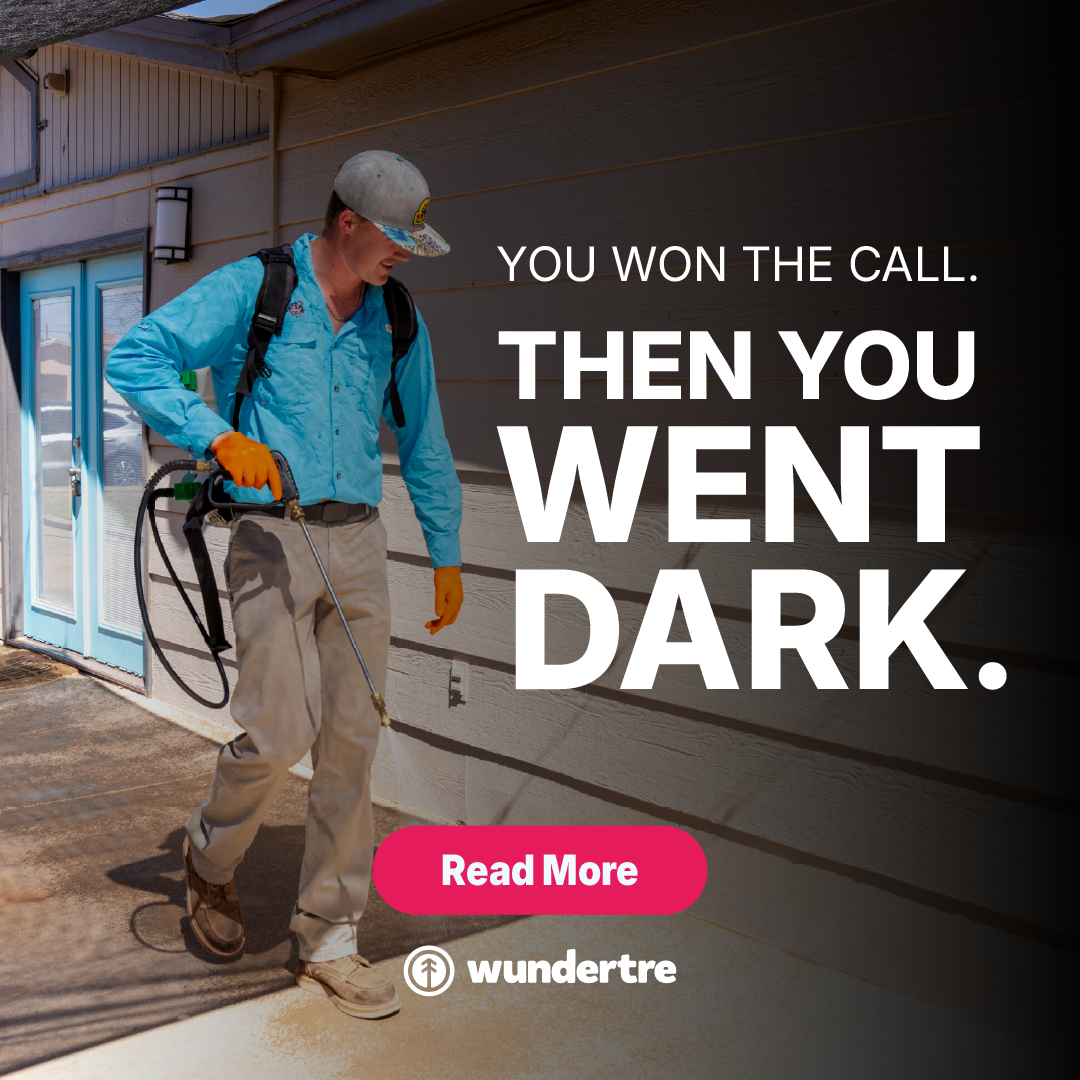
You answered the phone, gave the quote, and then… nothing. That silence is a marketing decision — you just didn't make it on purpose.
We've already written about answering fast. This post is about everything after the first call: the follow-up, the reminder, the check-in. Because most service businesses don't lose leads by doing bad work. They lose them by disappearing.
The quote you never followed up on
You did the hard part. The phone rang, you picked up, you went out, measured, priced it fair, and sent the quote. Then the day got busy.
A week later you think, "I should call them." Two weeks later it feels awkward. A month later, you assume they went with someone else. Maybe they did. Or maybe they were waiting for the one thing you never sent: a reminder that you still wanted the job.
Homeowners and business owners aren't sitting by the phone thinking about your quote. They're juggling kids, invoices, a roof leak, and three other estimates. The quote that gets a friendly follow-up stays on the table. The one that doesn't quietly slides into the pile of "we'll deal with it later."
That isn't a sales problem. It's a system problem. Following up from memory works until the week you're slammed, and every service business has a lot of those weeks.
Follow-up isn't nagging (if it's useful)
A lot of owners skip the follow-up because they don't want to be "that guy." Fair. Nobody likes the contractor who calls every day asking, "So, are we doing this?"
But there's a big difference between pestering and helping. A useful follow-up makes the lead's decision easier. It answers the question they forgot to ask, shows them a finished job like theirs, mentions the open slot next Tuesday, or explains the financing option. That lines up with research published in Harvard Business Review: people stay loyal to the companies that make things easy and solve the next problem before it comes up, not the ones that try hardest to dazzle them (Dixon, Freeman & Toman, HBR, 2010).
That's why Wundertre's rule is Relentless Communication. Every open quote gets followed up automatically with 5 to 12 touches, spread across the channels people actually check:
- A call to talk it through and answer questions
- A text with a quick, friendly nudge
- An email with the details, photos, or a link to book
- A voicemail drop that leaves a short message without interrupting their day
Each touch should earn its place with something new. And when someone says they're done, stop. Under FCC rules, people can opt out of automated calls and texts in any reasonable way, including simply replying "stop," and businesses have to honor that within 10 business days (Federal Register, 2024). Relentless doesn't mean ignoring a no. It means never letting a maybe die from neglect.
Hear from you before they think to leave
The quote isn't the only place businesses go dark. The bigger leak is the lead you already won and served well.
You fixed their AC, sprayed their yard, cleaned their carpets. They were happy. Then you never spoke again. Eighteen months later the same problem pops up, and they can't remember your company name. So they search, find whoever ranks first, and call them. You didn't lose that lead to a competitor's better work. You lost them to their own memory.
The fix is simple: reach out on a schedule, before they think to shop around.
- Seasonal reminders. "It's almost fall. Want us to check your furnace before the first cold snap?" Timely, useful, and easy to say yes to.
- Check-ins. A short note a few weeks after the job to make sure everything is still working. It catches small problems early and keeps your name top of mind.
- Review requests. Ask happy leads you've served to share their experience. BrightLocal's 2026 survey found that most people who were asked to leave a review actually did, and that buyers increasingly favor businesses with recent reviews over ones with a stale profile (BrightLocal, 2026). A steady stream of requests keeps your reputation current without you lifting a finger.
- Re-engagement. For leads you haven't heard from in a while, a friendly "we're still here" with a reason to book.
This is the cheaper half of growth. Those leads already trust you. You just have to keep showing up.
What "never go dark" looks like in a normal week (the checklist)
Never going dark isn't a heroic effort. It's a routine that runs whether you're on a job site, at your kid's game, or finally taking a Saturday off. Here's what that looks like in a regular week under Wundertre's Omni-Service standards:
- Every new lead hears back within 5 minutes. An AI voice agent picks up inbound calls 24/7, so no new lead ever hits voicemail. (We covered the speed side in Your Next Customer Is Already Looking for You. Will You Answer?)
- Every open quote is on a follow-up sequence. 5 to 12 automated touches by call, text, email, and voicemail drop, until the lead books or says no.
- Every touch adds something. A photo, an answer, an open slot, a financing option. Never just "checking in."
- Finished jobs get a check-in and a review request. Sent automatically, so it happens even on your busiest week.
- Past leads get a seasonal reminder. Timed to when they'll actually need you next.
- Quiet leads get a re-engagement message. A friendly reason to come back before they forget your name.
- Every "stop" is honored. Opt-outs are recorded and respected across calls and texts.
If you can check every box without thinking about it, you're not going dark. If you're relying on sticky notes and good intentions, you probably are.
Stop letting silence make the decision
You already did the hard work to earn the call. Don't let a busy week undo it. Follow up on every quote, stay in touch with every lead, and make sure every new lead reaches someone, day or night.
Want follow-up that never goes dark — without adding staff? Book a free discovery call.
Sources
1. Matthew Dixon, Karen Freeman, and Nick Toman, "Stop Trying to Delight Your Customers," Harvard Business Review, July–August 2010.
2. Rosie Murphy, "Local Consumer Review Survey 2026," BrightLocal, February 11, 2026.
3. Federal Communications Commission, "Strengthening the Ability of Consumers To Stop Robocalls," final rule, Federal Register Vol. 89, No. 44, March 5, 2024.
4. Wundertre, "The Omni-Revenue Framework — Omni-Service."